Understanding Search Intent: How to Align Your Content with User Queries
Understanding search intent is crucial for crafting content that resonates with your audience. Search intent refers to the underlying reason why users perform a particular query, whether it's informational, navigational, transactional, or commercial. By analyzing the keywords people use, you can better align your content to satisfy their needs. For instance, queries like 'how to bake a cake' typically indicate an informational intent, while 'buy chocolate cake online' suggests a transactional intent. By identifying these nuances, you can create targeted content that meets users' expectations and encourages engagement.
To effectively align your content with user queries, consider following these steps:
- Research Keywords: Use keyword research tools to identify variations of search terms that reflect different intents.
- Analyze Search Results: Examine the top-ranking pages for your target keywords to understand how others are addressing similar queries.
- Create Tailored Content: Develop content that directly answers user questions, ensures SEO optimization, and maintains a natural flow.
The Four Types of Search Intent: Navigating the User Journey
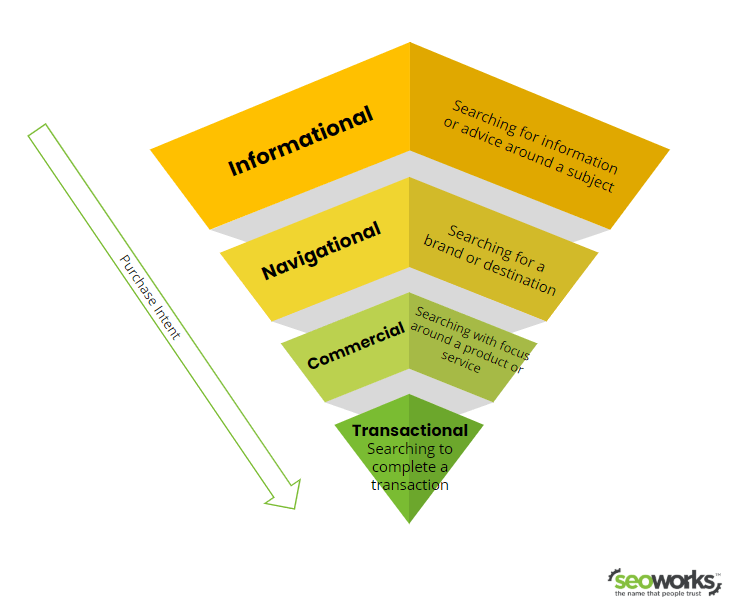
Understanding the four types of search intent is crucial for optimizing your content and effectively guiding users through their journey. These types include informational, navigational, transactional, and commercial investigation. Each category represents a different stage in a user’s search process, reflecting their specific goals. For instance, users with informational intent are seeking answers to questions or gaining knowledge about a topic, while those with transactional intent are looking to make a purchase or complete a specific action. Recognizing these intents allows content creators to tailor their strategies to meet users' needs.
To effectively navigate the user journey, it’s essential to align your content with these search intents. For example, when targeting users with navigational intent, focus on creating content that helps them easily find specific websites or services. In contrast, for those in the commercial investigation stage, your content should provide comparisons, reviews, or product recommendations that aid in their decision-making process. By optimizing your content for these four types of search intent, you can enhance user experience, increase engagement, and ultimately drive more conversions on your website.
Why Decoding Search Intent is Essential for Effective SEO
Decoding search intent is a fundamental aspect of effective SEO that goes beyond mere keyword optimization. Understanding what users are genuinely looking for when they enter a query helps you create content that meets their needs, ultimately increasing engagement and conversion rates. Whether users are seeking information, direction, or a specific service, tailoring your content to align with their intent can significantly enhance its relevance. This alignment ensures that your website not only attracts visitors but also retains them by providing valuable solutions to their queries.
Moreover, search intent can be categorized into three main types:
- Informational: Users are looking for answers to questions or guidance on a specific topic.
- Navigational: Users intend to find a specific website or page.
- Transactional: Users are ready to make a purchase or complete an action.